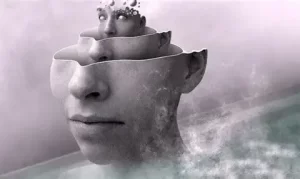
In the quiet depths of the therapeutic space, much of the work that truly transforms begins not in the light of our conscious mind, but in the shadowed landscape of the unconscious. It is there, within that hidden realm, that our deepest patterns, archetypes, and beliefs dwell — shaping the narratives we live by, often without our awareness.
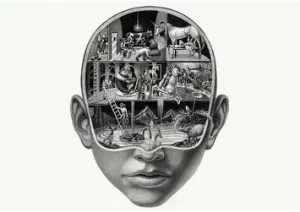
The unconscious is not simply a source of repressed memories or forgotten experiences; it is the vast container of our symbolic life — a sacred ground where our stories, fears, and longings intertwine. Drawing from Jungian psychology, we can see that each person’s unconscious holds within it a unique constellation of archetypes — the universal patterns of human experience. These archetypes manifest in our dreams, our relationships, and the symbolic language of our inner world. They are the heroes, caregivers, seekers, and wounded healers who speak through us, guiding us toward integration and wholeness.
Archetypes and the Narrative of Self
In my work with clients, I often witness how the unconscious communicates through the stories people tell about themselves. These narratives reveal the archetypal energies at play — sometimes chosen consciously, but often imposed by family, culture, or circumstance. The “rescuer,” the “invisible one,” the “caretaker,” the “fighter” — these are not merely roles, but reflections of deeper mythic forces that once served survival and belonging. Over time, however, these same narratives can become cages, limiting the freedom to evolve and to rewrite the story from a place of awareness rather than reaction.
Therapeutic work involves uncovering — bringing to awareness what has been hidden in the shadow realm. The shadow, as Jung describes it, holds not only what we reject in ourselves but also the untapped potential of our being. By confronting it with compassion rather than fear, we enable integration and healing to occur.
Synchronicity and the Language of the Soul
At times, when we open ourselves to the unconscious, life responds in ways that seem mysteriously aligned — moments Jung called synchronicities. These meaningful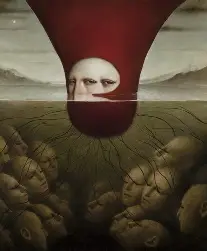 coincidences are not accidents, but expressions of a deeper order, a dialogue between the inner and outer worlds. For clients willing to explore the transpersonal dimension of healing — that bridge between psyche and spirit — synchronicity becomes a powerful teacher. It reminds us that healing is not linear, nor confined to the rational mind; it is guided by something greater, an unseen intelligence that invites us to trust the process.
In my sessions, I often experience this delicate dance — the moment when a client describes a dream or symbol that coincides with an outer event, or when words spoken in reflection mirror the very truth the other is trying to find. These are sacred moments of alignment, when the unconscious and the conscious meet in mutual recognition.
The Long Night of the Soul
For many, the journey through trauma feels like a descent into darkness — what mystics have called the long night of the soul. It is a time when old certainties collapse, and meaning dissolves into uncertainty. Yet, it is also the fertile soil for transformation. Therapy, in this sense, is not the act of erasing pain but of guiding someone through that night — being the “light” and the “friendly hand” that helps them find their way out.
In this sacred companionship, the therapist becomes a witness to the unfolding of the soul. The process is both deeply human and profoundly spiritual — a meeting between two beings who together hold the tension between suffering and awakening.
 Awakening Through the Shadow
Ultimately, the power of the unconscious lies in its ability to reveal the wisdom embedded in suffering. What begins as darkness can, through awareness and compassion, become the source of light. The work of therapy is not to deny the shadow but to integrate it — to allow the unconscious to speak, to guide, and to heal.
When clients embrace the archetypal journey of their own becoming, they move beyond survival into a space of meaning and purpose. This is where the personal meets the transpersonal, where healing transcends symptom and becomes awakening.
And as we walk alongside them — in devotion, compassion, and presence — we too are transformed.
Hari Om Tat Sat