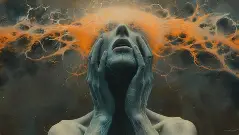
 Pain has a way of transforming a life.
Not just the body, but also the mind, the heart, and the rhythms we once took for granted. Chronic pain, in particular, is not merely an episode but a constant companion. It lingers. It disrupts. It demands. For many, it gradually erodes the edges of daily life, tinting everything with a hue of exhaustion that others rarely notice.
But pain is not only a physical sensation—it's an emotional landscape.
A constant ache can easily become isolation, fear, helplessness, or grief. It can take away the simplicity of a morning stretch or the ease of climbing stairs, and along with it, it can steal pieces of identity, purpose, and joy. This is why chronic pain is not merely a medical issue; it is a profound mental health challenge. It affects mood, sleep, relationships, self-worth, and our sense of possibility.
And yet—within this reality, there is still room for healing, not by eliminating the pain, but by transforming our relationship with it.
One of the most significant shifts occurs when we start to live with pain instead of reacting to it. Much suffering results from the struggle—trying to fight, suppress, or outrun the discomfort. When the prognosis indicates that the pain may persist forever, resisting it only causes more distress.
Acceptance, in this context, is not resignation.
It is an act of courage.
A radical willingness to say, “This is here, and I will still live.”
Acceptance creates space. Space for breath, for choice, for agency. It lets us build a life alongside the pain rather than waiting for the day it disappears. Many people describe a moment—sometimes fleeting, sometimes profound—when they stop battling reality and feel a softening within. Not a giving up, but a settling. A grounding.
From that place, the inner world becomes more accessible again.
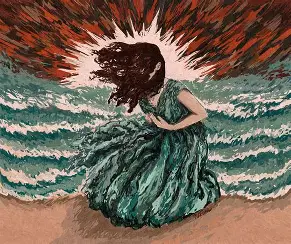
Interventions That Support Mind and Body
There are many approaches that can help reduce the mental health load of chronic pain:
- Mindfulness and breath-based therapies help widen awareness beyond the pain, teaching the nervous system that it is safe to settle even when the body hurts.
- Acceptance and Commitment Therapy (ACT) supports people in living meaningful lives by accepting the pain while still moving toward what matters.
- Cognitive–behavioural approaches can shift unhelpful beliefs that intensify suffering (“I’m broken,” “I’m a burden,” “Nothing will ever improve”).
- Body-based practices, adapted gently—such as somatic awareness, yoga, or breath–movement integration—can help the body feel less threatened and more connected.
- Creative expression—art, writing, sound—offers a place for emotions that have nowhere else to go.
- Community and therapeutic support reduce the loneliness that often deepens pain.
None of these erase the physical sensations, but each contributes a thread of relief, grounding, or empowerment. Together, they weave a new way of living.
Walking With Pain Instead of Being Led by It 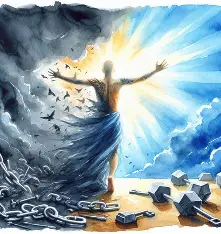
A central part of healing is reclaiming authorship. Instead of the pain dictating the day, we begin to decide:
What can I do? What do I value? Where can I place my limited energy to nourish something meaningful?
Some days, the choice may be small—a peaceful moment in nature, a conversation, a gentle stretch. Other days, the choice might simply be to rest with compassion rather than self-judgment. Over time, these small decisions build up into a renewed sense of identity.
The Teachings of Pain
Though difficult to acknowledge, many people find that chronic pain becomes a teacher—not one we would ever choose, but one that reveals truths:
- The body speaks, even in its struggles.
- Slowness has wisdom.
- Vulnerability is strength.
- Limits can open new forms of creativity and connection.
- Life’s sweetness becomes more precious when it requires effort to reach.
Pain is never a blessing. But for some, it becomes a doorway into deeper inner listening, a quiet form of resilience, or a new way of seeing what truly matters.
The journey through chronic pain is not straightforward. It is chaotic, often frustrating, with steps forward and back. Yet, amidst this complexity, life still offers small moments of beauty—moments that remind us that life itself is still worth cherishing.
Hope does not always appear as the absence of pain. Sometimes, it shows up as the decision to keep living fully, gently, and bravely, no matter the weight we carry.
Life is far too good to miss—even when we must meet it slowly.
Hari Om Tat Sat