In Andean traditions, a despacho is often described as an offering. But this translation only captures part of its meaning.
A despacho is not simply something we give. It is a way of remembering relationship.
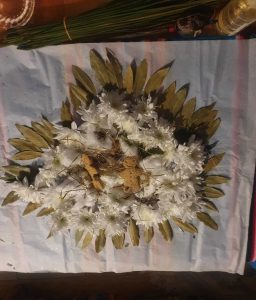
Rooted in the cosmology of the Andes, particularly within Quechua wisdom, a despacho is a carefully created bundle of natural elements—flowers, seeds, sweets, grains—arranged with intention and prayer. It is offered back to the living world as an act of reciprocity.
At its heart, a despacho expresses a simple but profound principle:
that life is sustained through exchange, gratitude, and balance.
Why Make a Despacho?
 In Andean understanding, humans are not separate from nature. We are part of a wider field of relationships that includes the Earth, the mountains, the waters, the sky, and the unseen forces that hold life together.
A despacho is made to:
- Give thanks for what has been received
- Restore balance where there has been difficulty or disruption
- Mark transitions (seasons, life events, beginnings, endings)
- Offer prayers for healing, growth, or guidance
It is not about asking for something in isolation. It is about participating in a relationship—one where giving and receiving are intertwined.
The Process: How a Despacho Is Created
There is no single fixed way to make a despacho, but the process often follows a shared rhythm.
A base—usually paper or cloth—is laid out. This becomes the “field” of the offering.
From there, elements are added one by one, each carrying meaning:
- Flowers and petals for beauty and impermanence
- Seeds and grains for growth and potential
- Sweets to represent kindness and the sweetness of life
- Leaves or herbs for connection to the natural world
- Personal symbols or intentions placed quietly by each participant
Each item is offered with awareness. Sometimes silently, sometimes with spoken words.
The despacho becomes a layered expression of collective and individual intention—a prayer made visible.
Once complete, it is traditionally folded and returned to nature—burned, buried, or offered to water—symbolising that the prayer is not kept, but released back into circulation.
Small Everyday Despachos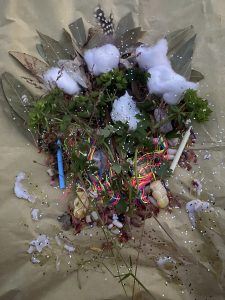
While some despachos are elaborate ceremonial offerings, the essence of the practice can also be found in much simpler acts.
A small despacho might look like:
- Placing a few flowers and seeds outside with a moment of gratitude
- Lighting a candle and offering a quiet reflection at the end of the day
- Leaving a small portion of food as a symbolic gesture of thanks
- Taking a pause in nature and consciously acknowledging what sustains you
These gestures may seem small, but they carry the same intention:
to remember that life is not something we take for granted.
Connections Across Traditions
The practice of making offerings is not unique to the Andes. Across cultures and throughout history, humans have expressed gratitude and respect through acts of giving.
 In ancient Greek traditions, offerings were made to the gods through food, wine, and fire.
In Hindu practices, puja involves offering flowers, light, and incense as acts of devotion.
In many Indigenous cultures, offerings of tobacco, food, or prayer are made to honour the land and ancestors.
Even within contemporary religious traditions, lighting candles or sharing bread carries echoes of this same impulse.
While the forms differ, the underlying intention is shared:
- To acknowledge that life is sustained by forces beyond the individual
- To express gratitude and humility
- To participate in a relationship with the seen and unseen world
In this sense, a despacho sits within a much wider human story—one of offering, recognition, and connection.
A Different Way of Relating
What the practice of despacho gently invites is a shift in perspective.
From:
“What can I get?”
To:
“How am I in relationship with what I receive?”
It reminds us that balance is not achieved through control, but through ongoing exchange.
In a world that often moves quickly and emphasises productivity, the act of pausing to make an offering—however small—can feel both simple and radical.
It asks us to slow down.
To notice.
To give thanks.
And perhaps, in doing so, to remember that we are not separate from the systems that sustain us.
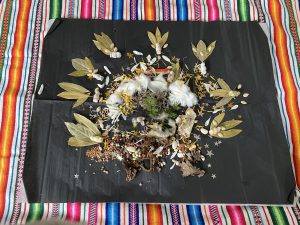
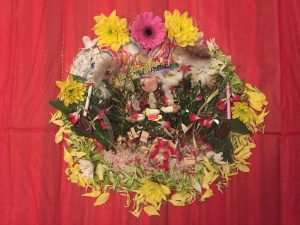
These pictures reflect some of the despachos and offerings over the years. Different occasions, same purpose, to remind myself and others of our eternal relationship and gratitude towards this planet and all its inhabitants.
Hari Om Tat Sat