Finding Meaning Beyond Pathology
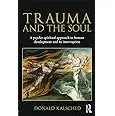 Reading Donald Kalsched’s Trauma and the Soul: A Psycho-Spiritual Approach to Human Development and Its Interruption has been a deeply meaningful experience for me, particularly in relation to my work with clients who have experienced trauma.
Kalsched invites us into a way of understanding trauma that moves beyond conventional ideas of symptoms, dysfunction and pathology. Through a Jungian and psycho-spiritual lens, he explores what happens to the inner world when overwhelming experiences interrupt the natural movement of human development. What I found particularly powerful was his invitation to listen differently to the experiences of trauma — not simply as something that needs to be eliminated, but as something that may contain meaning, symbolism and even the possibility of transformation.
This has resonated strongly with my own discoveries in working with clients from a transpersonal perspective.
When someone speaks about an experience that may appear unusual, fragmented, frightening or difficult to understand, it can be tempting to immediately interpret it through the language of pathology. Yet, when we approach the client's inner reality with curiosity and respect, another possibility emerges. Their experiences can become a tapestry of signs, images, symbols and stories — each potentially carrying information about what has been lost, protected, suppressed or waiting to emerge.
This does not mean romanticising trauma or suggesting that suffering is somehow necessary for growth. Trauma can profoundly interrupt development and cause immense suffering. But within the therapeutic relationship, there can be an opportunity to discover that the psyche has its own ways of communicating and protecting itself.
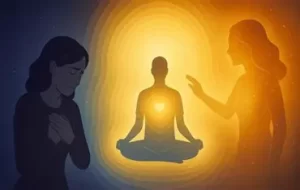
From a Jungian perspective, symbols can provide a bridge between conscious awareness and deeper aspects of the psyche. From a transpersonal perspective, experiences can sometimes point towards dimensions of meaning and identity that extend beyond the everyday sense of self. Holding these perspectives carefully can create space for clients to explore their experiences without immediately defining them as broken or disordered.
One of the most important reflections this book has strengthened for me is the importance of integrative approaches to trauma. There is no single way in which trauma is experienced, embodied or processed. What overwhelms one person may be processed very differently by another, depending on their history, relationships, resources, culture, body, spirituality and meaning-making systems.
For this reason, therapeutic work needs flexibility. Sometimes the work may involve the body and nervous system; at other times, relationships, emotions, memories, dreams, imagination, spirituality or questions of identity may become central. An integrative approach allows us to meet the person rather than simply treating the trauma.
Perhaps most importantly, I have been reminded that healing can involve more than reducing symptoms. It can also involve self-empowerment, meaning, reconnection and hope.
Kalsched’s work has given me another language through which to understand the complexity of trauma and the remarkable ways in which the psyche attempts to survive overwhelming experiences. It has encouraged me to remain curious about the symbolic worlds of my clients and to honour their realities without immediately reducing them to pathology.
I would highly recommend Trauma and the Soul to anyone interested in trauma, Jungian psychology, transpersonal psychology and the deeper dimensions of human development. It is a book I know I will return to in the future — not only as a source of insight, but as a valuable reference point for my continuing work with clients and my ongoing exploration of what it means to support another human being on the path towards healing.
Om Tat Sat