Nine Nights of Courage, Creation and Transformation
Every year, across India and around the world, millions of people celebrate Navaratri, the festival of nine nights dedicated to the Divine Feminine. Yet beyond the rituals, colours, music and devotion lies a profound spiritual teaching: the feminine is not a secondary force in the universe. She is the power through which life is created, sustained, transformed and protected.
In Sanātana Dharma, the ancient spiritual traditions often referred to as Hinduism, this power is known as Shakti — the dynamic energy of existence itself. Without Shakti, even the gods are unable to act. Navaratri reminds us that when destruction threatens the balance of life, it is the Goddess who must be awakened.
When the Gods Turn to the Goddess
One of the most powerful stories associated with Navaratri is the battle between Goddess Durga and the buffalo demon Mahishasura. Blessed with a form of protection that made him nearly invincible to male gods, Mahishasura grew arrogant and threatened the cosmic order. The gods, unable to defeat him, united their divine energies. From their combined radiance emerged Durga, a formidable Goddess carrying the weapons entrusted to her by the gods themselves.
This is a remarkable statement about feminine power. When the established forces of authority could no longer restore balance, they had to recognise a power beyond their own. The Goddess did not appear as a passive figure awaiting rescue. She became the force of action, courage and protection.
Her victory is not simply a story of good triumphing over evil. It is a reminder that power without wisdom becomes destructive, and that genuine strength includes the capacity to protect life, confront injustice and restore balance.
From a contemporary feminist perspective, this story offers a compelling reflection: women do not need to become copies of masculine power to be powerful. Their strength may express itself through compassion, intuition, discernment, fierce protection, leadership and the courage to challenge what is unjust.
Nine Nights, Nine Expressions of the Feminine
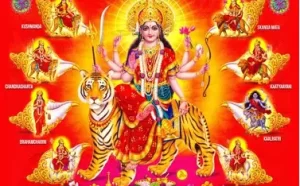
Navaratri honours nine forms of the Goddess, collectively known as the Navadurga. Although customs and interpretations vary across regions and traditions, these forms offer a meaningful symbolic journey through the qualities of feminine life.
Days 1–3: Courage, grounding and awakening
Shailaputri represents the strength of the mountain — rootedness, endurance and connection to the earth. Brahmacharini embodies devotion, discipline and the perseverance required to follow a path. Chandraghanta expresses courage, readiness and the power to defend what is sacred.
These qualities can speak to the foundations of womanhood: learning to inhabit one's body, establish boundaries, trust one's inner compass and find the courage to stand firmly in the world.
Days 4–6: Creation, nurture and transformation
Kushmanda is associated with the creative energy through which the universe comes into being. Skandamata represents nurturing love and the protective dimension of motherhood. Katyayani embodies determination and the readiness to confront injustice.
Together, they challenge the narrow idea that femininity must mean either softness or sacrifice. A woman may create, nurture and protect while remaining independent, ambitious and fierce. Motherhood can be sacred, but it is not the condition of a woman's worth. Every woman has a life and identity that deserve respect, whether or not she becomes a mother.
Days 7–9: Liberation, wisdom and fulfilment
Kalaratri confronts darkness and destruction, reminding us that transformation sometimes requires facing what frightens us. Mahagauri symbolises purity, peace and renewal. Siddhidatri represents spiritual accomplishment and the fulfilment of potential.
These forms invite us to consider the changing seasons of a woman's life: the emergence of identity, the intensity of adulthood, the transitions of the body, the thresholds of motherhood or non-motherhood, menopause, ageing and the possibility of spiritual maturity. These are not identical experiences for every woman, nor do the nine Goddesses prescribe a fixed sequence for women's lives. Rather, they offer a symbolic language for honouring change, resilience and renewal.
The Cycles of Womanhood as Sacred Wisdom
The Goddess is not confined to one expression. She is nurturing and fierce, creative and destructive, tender and uncompromising. This plurality resonates with the cycles of women's lives and challenges cultural expectations that women must remain pleasing, self-sacrificing, youthful or endlessly available to others.
A woman’s body is not a problem to be corrected, and her changing needs are not signs of weakness. Menstruation, fertility, pregnancy, menopause and ageing can carry different meanings for different women; none should be romanticised or imposed as a universal spiritual experience. What deserves celebration is the dignity of the woman through every stage of her life.
From a Sanātana Dharma perspective, the sacred feminine offers a vision of life in which feminine energy is fundamental to cosmic existence. From a feminist perspective, this vision becomes meaningful when it is reflected in lived reality: in women's freedom, safety, education, autonomy, leadership and equal participation in society.
Beyond the Festival: Bringing Shakti into Everyday Life
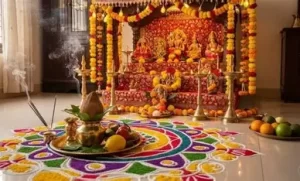
Navaratri is more than nine nights of worship. It is an invitation to recognise the Goddess not only in temples and sacred stories, but in the women around us — and in the qualities of courage, compassion, creativity and discernment that all human beings can cultivate.
It asks us to reflect on whether our families, institutions and cultures genuinely honour women, or merely praise feminine divinity while restricting women's choices. Reverence has little meaning if it is not accompanied by respect, protection and justice.
Perhaps the most radical message of Navaratri is this: the feminine does not need permission to exist in her fullness.
She can nurture without disappearing into service. She can love without surrendering her boundaries. She can be gentle without being powerless, and fierce without apologising for her strength.
As Durga rises to confront the forces of destruction, we are reminded that courage sometimes emerges when every other option has failed — and that transformation begins when power is recognised, gathered and brought into action.
May these nine nights inspire us to honour the sacred feminine not only through celebration, but through the way we live, the choices we respect and the future we create for women and girls.
Jai Mata Di. Jai Shakti.