A Gateway to Human Potential and Transpersonal Healing
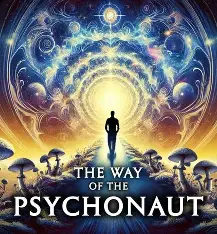
Stanislav Grof’s The Way of the Psychonaut (Volumes I & II) stands as one of the most profound and comprehensive works in the field of transpersonal psychology. More than a book, it is a map of consciousness—an invitation to explore the vast inner landscapes of the human psyche and to reconsider what it truly means to be human.
Grof’s work has deeply shaped the transpersonal approach I bring into my practice with clients. His understanding of consciousness as multidimensional, non-linear, and inherently meaningful offers a framework that honours human experience rather than reducing it to symptoms or diagnoses.
States of Consciousness as Gateways, Not Pathology
 One of Grof’s most significant contributions is his detailed exploration of non-ordinary states of consciousness—including holotropic states, spiritual emergencies, and transpersonal experiences. Rather than viewing these states as signs of mental illness, Grof understands them as natural, transformative processes that can arise during deep psychological work, life transitions, trauma, or spiritual awakening.
In The Way of the Psychonaut, he describes these states with remarkable clarity, drawing from decades of clinical research, anthropology, mythology, neuroscience, and cross-cultural spiritual traditions. His work challenges the dominant medical model of classical psychology and psychiatry, which often pathologises experiences that do not fit within a narrow definition of “normal.”
Instead of suppression or repression, Grof advocates for containment, understanding, and integration.
Spiritual Emergency and the Healing Potential of Crisis
A central theme in Grof’s work is the concept of spiritual emergency—a period where psychological, emotional, and spiritual material emerges with intensity, often overwhelming the individual. While such experiences can resemble psychosis on the surface, Grof makes a crucial distinction: when properly supported, these crises can become powerful catalysts for healing, self-actualisation, and expanded awareness.
This perspective is foundational in my work with clients, especially those navigating trauma, identity shifts, existential questioning, or intuitive and spiritual experiences that feel confusing or frightening. Rather than asking “What is wrong?”, the transpersonal approach asks:
“What is trying to emerge?”
Human Consciousness as an Evolutionary Journey
Grof proposes that the development of human consciousness is not incidental, but central to the aim of human existence. From biographical layers to perinatal experiences and transpersonal realms, consciousness unfolds in ways that connect personal healing with collective, ancestral, and even cosmic dimensions.
This view resonates deeply with individuals who sense that their struggles carry meaning beyond pathology—that their experiences are part of a larger journey toward wholeness. In this way, healing becomes not only the resolution of symptoms, but an initiation into deeper self-knowledge.
A Holistic, Cross-Cultural Framework
What makes The Way of the Psychonaut especially powerful is Grof’s refusal to isolate psychology from culture, spirituality, or history. He weaves together insights from:
- Indigenous and shamanic traditions
- Eastern spiritual philosophies
- Mythology and archetypal psychology
- Modern clinical and therapeutic practice
This holistic perspective validates intuitive, symbolic, and embodied ways of knowing—often dismissed in Western clinical settings—while grounding them in rigorous research and ethical therapeutic care.
A Living Reference for Transpersonal and Intuitive Psychology
For practitioners, The Way of the Psychonaut serves as a foundational reference for transpersonal psychotherapy. For individuals, it is a guidebook for navigating expanded states of awareness with curiosity rather than fear.
These two volumes are essential reading for:
- Those interested in transpersonal and intuitive psychology
- Individuals experiencing or supporting spiritual awakening or crisis
- Therapists seeking alternatives to purely diagnostic models
- Anyone determined to explore the full spectrum of human potential
Opening the Doors of Human Potential
Grof’s work affirms something deeply human: that our inner experiences—no matter how unusual, intense, or symbolic—deserve respect, context, and compassionate understanding. His legacy continues to inform a therapeutic approach that values integration over suppression, meaning over pathology, and self-actualisation over control.
In my practice, this philosophy translates into holding space where clients can safely explore their inner worlds, reconnect with their innate wisdom, and integrate experiences that may once have felt overwhelming or isolating.
The Way of the Psychonaut is not about escaping reality—it is about meeting it more fully, with depth, courage, and reverence for the mystery of consciousness itself.
HariOmTatSat