Have you ever wondered why a yoga class that leaves one person feeling calm and centred leaves another feeling exhausted, irritated, or strangely disconnected?
In trauma-informed yoga and counselling, this isn’t a failure of practice — it’s a sign that our nervous systems are all different. We don’t respond to stress, safety, or healing in the same way. Ayurveda, when viewed through a trauma-informed lens, gives us a helpful language for understanding these differences.
The three doshas — Vata, Pitta, and Kapha — can be understood not as labels, but as patterns of how our bodies and minds try to protect us when life becomes overwhelming.
When stress or trauma lingers, these patterns can become stuck. Yoga and counselling work best when they don’t try to override these responses, but gently support the nervous system back into balance. 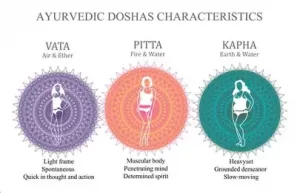
Vata: When Life Feels Fast and Unsettled
If you’re someone whose mind never quite slows down, who feels anxious, restless, or “up in the air,” you may recognise a Vata pattern. Vata nervous systems are sensitive, perceptive, and creative — but they can also become overwhelmed easily.
When stress or trauma is present, Vata often shows up as:
- Racing thoughts or anxiety
- Poor sleep
- Digestive discomfort
- Feeling ungrounded or scattered
- A sense of always needing to move
Many Vata-leaning people are drawn to fast, flowing yoga. It feels good to move, to release nervous energy, to stay in motion. And in the moment, it can help.
But trauma-informed practice gently asks a different question:
Does this help you feel safer, or just busier?
What truly supports Vata healing is steadiness. Slower practices. Predictable routines. Time on the floor. Longer holds. Gentle breathing. Not forcing stillness — but slowly making it feel safe enough to rest.
In counselling, this looks like slowing the pace, building trust, and helping the body learn that it doesn’t need to stay alert to stay safe.
For Vata, healing isn’t about stopping movement — it’s about finding a place to land.
Pitta: When Holding It Together Gets Heavy
Pitta types are often the ones who cope by staying strong. They’re capable, driven, and focused. When life is hard, they push through.
Trauma and chronic stress in Pitta can look like:
- Burnout or exhaustion
- Irritability or anger
- Perfectionism and self-criticism
- Inflammation or stress-related health issues
- Difficulty resting without guilt
Pitta-leaning people often love strong yoga: power classes, hot yoga, anything that feels productive. There’s a sense of control, mastery, and achievement — and that can feel regulating.
Until it doesn’t.
Trauma-informed yoga recognises that effort can be a coping strategy, not a solution. Healing for Pitta comes from softening rather than striving.
Cooling practices. Slower flows. Fewer goals. Longer rests. Breathing that soothes rather than energises. Being reminded — again and again — that you don’t have to earn rest.
In counselling, this means creating space where vulnerability doesn’t feel like failure, and where worth isn’t measured by output.
For Pitta, healing happens when doing less becomes safe.
Kapha: When It’s Hard to Get Moving Again
Kapha nervous systems protect through steadiness. They’re loyal, caring, and deeply grounded — but when trauma is present, that steadiness can turn into heaviness or withdrawal.
Kapha-based trauma responses may include:
- Low motivation or numbness
- Feeling stuck or resistant to change
- Depression or emotional flatness
- Avoiding movement or stimulation
- Holding emotions in the body
Kapha-leaning people may struggle to start yoga at all when overwhelmed. Trauma-informed care understands that this isn’t laziness — it’s protection.
Healing here is gentle and relational. Small movements. Simple routines. Warmth. Encouragement without pressure. Practices that slowly reintroduce energy and engagement without overwhelm.
In counselling, it means going at the person’s pace, valuing connection over progress, and supporting tiny steps back into life.
For Kapha, healing is about remembering that movement — and connection — can feel safe again.
Healing Isn’t One-Size-Fits-All
Trauma-informed yoga and counselling remind us of something deeply important:
There is no universal healing practice.
What calms one nervous system may activate another. What energises one may overwhelm someone else. When we understand our constitution — and our trauma responses — we stop trying to force ourselves into practices that don’t fit.
Instead, yoga becomes less about achievement and more about listening. Counselling becomes less about fixing and more about attunement.
And healing becomes something kinder, slower, and far more sustainable.
Hari Om Tat Sat.