There are nights that feel different in the body long before the mind understands why. Maha Shivaratri is one of those nights. It is not simply a festival. It is a remembering.
In the tradition of Sanatana Dharma, Maha Shivaratri is the sacred night of Mahadeva — the Great God, the Adi Guru, the first teacher who sits in absolute stillness while holding the cosmos within Himself. It is a night dedicated to tapas, inner fire, restraint, vigilance, and devotion. A night where seekers turn inward, stay awake, chant, fast, and meditate — not out of obligation, but out of longing.
Longing to return to Truth.
Longing to return Home.
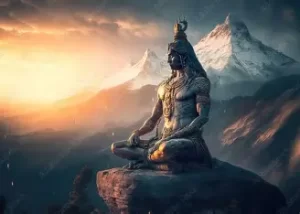
The Tapas of the Night
Tapas is often misunderstood as austerity alone. In its truest sense, tapas is the heat that burns away forgetfulness.
On Maha Shivaratri, tapas takes many forms:
- Remaining awake through the night
- Fasting or eating lightly
- Repeating the sacred name
- Sitting in meditation despite discomfort
- Choosing awareness over habit
These practices are not meant to punish the body, but to refine perception. To thin the veil between the seen and the unseen. To make the heart quiet enough to hear what has always been calling.
Shiva is not found through overabundance. He is uncovered through simplicity.
Remembering the Adi Guru
In the Shiva Purana, Mahadeva is described not only as the destroyer, but as the source of all knowledge. Before there were scriptures, before there were systems, there was Shiva — seated in silence, transmitting wisdom without words.
As Adi Guru, Shiva teaches through presence. His stillness is instruction. His detachment is compassion. His destruction is mercy.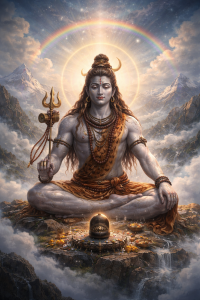
When the devas and asuras churned the ocean, and poison arose, it was Shiva who drank it — holding it in His throat to save the worlds. Thus He became Nīlakaṇṭha. This is not merely mythology; it is a teaching.
The one who has mastered the inner fire can hold poison without becoming poison.
This is the promise of the path.
Shiva Purāṇa, Vidyeśvara Saṁhitā (traditional teaching):
Na me vidyā na me dhyānaṁ na me yogaḥ na me tapaḥ
Mat-bhaktyā labhate sarvaṁ satyaṁ satyaṁ vadāmyaham
(Neither knowledge, nor meditation, nor yoga, nor austerity alone reaches Me.
Through devotion, all is attained — this is the truth I speak.)
On Maha Shivaratri, this verse softens striving. Shiva teaches not through instruction, but through presence and grace. The Adi Guru responds not to perfection, but to sincerity.
Shambho: The Face of Compassion
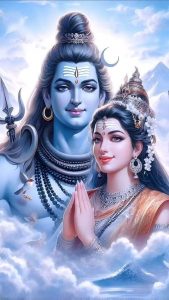 Among the many sacred names of Shiva, Shambho is the one that found me.
Shambho — the Benevolent One, the Compassionate One, the Source of Inner Peace.
My connection to Shambho did not arise from study or explanation. It arose from a moment of deep recognition.
The first time I heard His name, something ancient stirred within me. My body trembled. My heart felt an ache so deep it was almost unbearable — the ache of remembering a long separation from the Divine after different lives marked by pain, loss, and forgetting. It was as if every wound I carried suddenly knew where it belonged.
There was agony in that moment, but it was not despair. It was longing.
A longing so alive it felt like remembrance.
A knowing beyond reason and without language.
A remembering older than this lifetime.
I knew then that I had found the way back.
Where life had hardened me, Shambho softened.
Where survival had closed my heart, Shambho reopened it.
Where I had known only endurance, Shambho revealed compassion — not as weakness, but as truth.
Through His name, faith took root not as belief, but as presence. Through His compassion, the fragments of my soul began to return to themselves.
Sanskrit (traditional attribution – Shiva Purāṇa, Vidyeśvara Saṁhitā):
Śivo hi kevalaḥ sākṣāt karuṇā-rūpa eva ca
(Shiva is truly the Absolute itself, and His very nature is compassion.)
This verse reminds us that Shiva is not distant or punitive. As Shambho, compassion is not something He gives — it is what He is. To remember Shiva is to remember compassion as the ground of existence.
Hara: The One Who Takes Away
Among Shiva’s many names, Hara is another name that guides my practice:
Hara — the one who takes away.
Not the one who adds.
Not the one who comforts illusion.
But the one who strips, dissolves, and transforms.
From tamas — inertia, darkness, survival — Hara became the force of destruction that did not annihilate, but liberated.
Shiva in the Stories, Shiva in the Heart
The Shiva Purana tells us that on this night, Shiva manifested as an infinite pillar of light — beyond beginning and end — humbling Brahma and Vishnu, reminding even the highest gods that Truth cannot be grasped by ego or intellect. It can only be surrendered to.
This is why Maha Shivaratri is held in the dark half of the lunar month. We do not seek Shiva in brightness or celebration alone, but in the stillness of night, where distractions fall away, and longing becomes prayer.
An Invitation Into Silence
As we enter this auspicious evening, let this not be a ritual performed outwardly alone. Let it be an inner turning.
Sit.
Breathe.
Remember.
Whether through mantra, meditation, or silent presence, allow the name of Shiva — of Hara, of Mahādeva — to move through you. Not to escape life, but to meet it with truth.
For those who walk this path, Maha Shivaratri is not one night a year.
It is the echo of an eternal meeting.
A reminder that no matter how far we wander, the way back has always been waiting.
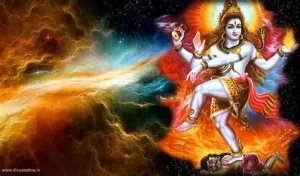
A Closing Mantric Verse for Shivaratri
Karacaraṇa-kṛtaṁ vā
Kāyajaṁ karmajaṁ vā
Śravaṇa-nayana-jaṁ vā
Mānasam vā aparādham
Vihitaṁ avihitaṁ vā
Sarvam etat kṣamasva
Jaya Jaya Karuṇābdhe
Śrī Mahādeva Śambho
(Whatever wrong I have done —
with hands or feet, body or action,
ears or eyes, mind or intention —
whether knowingly or unknowingly,
forgive all of it.
Victory to You, Ocean of Compassion,
O Mahādeva, O Śambho.)
Om Namaḥ Shivaya.
Om Hara Hara Mahadeva.
Hari Om Tat Sat