There are certain people we meet who leave an impression that goes beyond what they teach. Their presence becomes part of the teaching itself.
I experienced this when I met Leo Rutherford through a workshop at the Tribal Earth Festival in Sussex. I was deeply moved not only by the depth of his knowledge, but by his presence, humility and extraordinary ability to make profound ideas feel accessible, grounded and alive.
Meeting Leo at an age when many people might have withdrawn from teaching and exploration was particularly inspiring. He continues to offer workshops and shamanic studies in Sussex, demonstrating that the path of wisdom is not something that ends with age. If anything, his decades of experience appear to have brought an even greater simplicity and tenderness to the way he shares what he has learned.
Leo Rutherford has devoted almost four decades to the exploration and teaching of shamanic practice. His work encompasses the Medicine Wheel, shamanic journeying, drumming, ceremony, trance dance, altered states of consciousness, soul retrieval and other experiential approaches. His journey has taken him to sacred places and traditions across Europe and the Americas, and he has learned from a number of Indigenous teachers and practitioners, including Lakota, Cherokee/Métis and Peruvian teachers.
What strikes me particularly about his work is his intention to bring ancient wisdom into conversation with contemporary Western life without reducing it to a technique.
The Medicine Wheel as a map for life
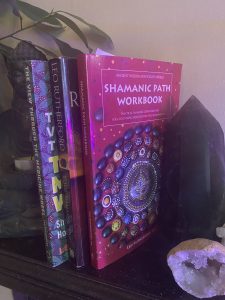 One of the central elements of Leo's teaching is the Medicine Wheel.
Rather than presenting it simply as a spiritual symbol, Leo describes the Medicine Wheel as a way of understanding life through a circular map — one that can help us recognise cycles, relationships, directions, energies and our connection with the wider world. His book The View Through the Medicine Wheel develops this idea as a framework for understanding how we navigate life and return to what he describes as our centre.
This resonates strongly with a transpersonal understanding of psychological development.
Western psychology has often approached the individual primarily through linear narratives: childhood, development, trauma, symptoms and treatment. Indigenous and ancestral traditions can offer different metaphors — cycles, seasons, relationship with nature, community, ancestors and the movement between different states of consciousness.
The Medicine Wheel offers an opportunity to ask not only “What is wrong?”, but also:
Where am I in the cycle of my life?
What am I being asked to learn?
What have I lost connection with?
What needs to return to balance?
This way of seeing can create a much larger psychological landscape.
Learning with respect
There is an important responsibility when approaching Indigenous and Aboriginal traditions.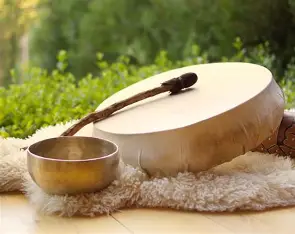
These are not simply collections of spiritual techniques that can be extracted from their cultures and incorporated into Western wellbeing practices. They belong to peoples, histories, places, ceremonies and living traditions.
One of the qualities I appreciate in Leo's approach is the reverence with which he speaks about the teachers and traditions that have influenced his path. His work has been shaped by many years of learning, travelling and relationship with practitioners from different traditions, while attempting to translate some of those teachings into forms accessible to contemporary Western participants.
That translation requires care.
It requires acknowledging what we do not know, respecting cultural origins and avoiding the temptation to turn sacred knowledge into another consumer product.
For me, this is one of the reasons Leo's humility is so important.
The Shamanic Path
Leo's The Shamanic Path — now available in a revised and updated Shamanic Path Workbook — provides another doorway into his teaching. His writing explores shamanic principles, journeying, consciousness and practical ways of engaging with the shamanic path.
The book reflects something that also comes through in his workshops: the shamanic path is not necessarily about escaping ordinary life.
It is about learning to see ordinary life differently.
Nature, dreams, intuition, relationship, ceremony, rhythm and the body can become ways of developing awareness.
This has a natural resonance with transpersonal psychology, which explores experiences that extend beyond our ordinary sense of individual identity while remaining interested in psychological integration and human development.
A living teacher in Sussex
Perhaps what makes Leo particularly remarkable is that this work is not simply historical.
He is still teaching.
His current programme includes Medicine Wheel exploration days, shamanic study evenings and experiential work such as trance dance in East Sussex. His workshops continue to explore journeying, the Medicine Wheel, consciousness, movement and other aspects of the shamanic path.
This is extraordinary to witness.
To encounter someone who has spent decades exploring these traditions and who, even in his nineties, remains curious, engaged and willing to share his experience is a reminder that wisdom is not necessarily about having all the answers.
Perhaps wisdom is the ability to remain open.
Open to nature.
Open to mystery.
Open to learning.
Open to what we cannot yet understand.
And open to the possibility that healing and transformation are lifelong processes.
Meeting Leo at Tribal Earth was therefore more than attending a workshop for me. It was an encounter with a living example of what it means to continue walking a path of inquiry with humility.
In a world increasingly dominated by speed, information and certainty, there is something deeply valuable about meeting someone who reminds us to slow down, listen and reconnect with the deeper rhythms of life.
Leo Rutherford feels, to me, like one of those rare gems who has spent a lifetime gathering knowledge without losing his humanity.
And perhaps this is ultimately what the shamanic path invites us towards:
not becoming someone extraordinary, but becoming more fully present to the extraordinary nature of being alive.
Om Tat Sat