Each year, on the full moon of the month of Ashadha, millions of people across India and around the world celebrate Guru Purnima. This year, the celebration falls on 29 July, offering an opportunity to pause, reflect, and express gratitude for those who have illuminated our path through wisdom, compassion, and example.
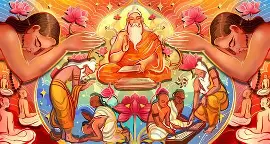
The Sanskrit word guru is often translated simply as "teacher," yet its meaning is far richer. Traditionally, gu means darkness and ru means that which removes it. A guru is not merely someone who imparts knowledge, but one who helps remove the darkness of ignorance, guiding us towards greater understanding of ourselves, our purpose, and ultimately our true nature.
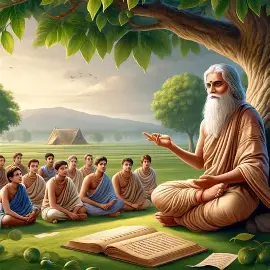 Within the Vedic tradition, knowledge has been preserved through an unbroken lineage (parampara), passed from teacher to student across countless generations. Long before sacred texts were written, wisdom was carried through direct transmission—from heart to heart, from life to life. This uninterrupted succession of knowledge has allowed timeless teachings to remain alive, adapting to each generation while preserving their essential truth.
Guru Purnima is therefore not simply a celebration of an individual teacher. It is a celebration of the lineage itself, of all those known and unknown who have devoted their lives to preserving wisdom for the benefit of others. Every authentic teacher stands upon the shoulders of countless masters before them, becoming one link in a chain that stretches back beyond recorded history.
For many people, meeting a true teacher is one of the greatest blessings of life.
A genuine spiritual teacher does not seek followers or dependency. Rather, they seek to awaken discernment, responsibility, and inner freedom within the student. Their role is not to become the destination, but to point towards it. They encourage us to ask questions, to practise sincerely, to develop our own direct experience, and ultimately to become established in truth ourselves.
In this sense, the greatest teachers are those who wish for our independence—not only in practical life, but in our spiritual life. They celebrate our growth rather than our dependence upon them. Their joy lies in witnessing their students discover their own wisdom while remaining connected to the timeless teachings that made such discovery possible.
This relationship is built upon trust, humility, and mutual respect. It asks us to recognise that there are moments in life when another person can see possibilities within us that we cannot yet see ourselves. Through encouragement, challenge, compassion, and unwavering presence, a teacher often becomes a mirror reflecting our highest potential.
Although Guru Purnima belongs to the Hindu, Buddhist, and Jain traditions, the principle it celebrates is universal. Across cultures and throughout history, humanity has honoured those who dedicate their lives to teaching and guiding others.
In Buddhism, disciples express deep gratitude to the Buddha and the lineage of teachers who have preserved the Dharma for over two thousand years. Indigenous traditions honour elders whose wisdom is carried through oral storytelling, ceremony, and lived experience. Sufi orders preserve chains of transmission connecting each teacher back through generations of masters. Christian monastic traditions recognise spiritual directors and mentors who accompany others in their journey towards God. Across cultures, we find the same profound understanding: wisdom is rarely discovered entirely alone.
In many ways, this celebration extends beyond formal spiritual teachers. We may recognise mentors, therapists, guides, parents, grandparents, friends, and even life itself as teachers. Sometimes our greatest lessons arrive through unexpected encounters, moments of suffering, or relationships that quietly shape who we become.
Guru Purnima invites us to remember that we are part of something much larger than ourselves. Every insight we receive has travelled through generations before reaching us. Every practice we undertake carries the dedication of those who preserved it through centuries of change. Every act of learning becomes an act of gratitude towards those who came before us.
As someone deeply rooted in the Vedic tradition, I find Guru Purnima to be one of the most meaningful celebrations of the year. It reminds me that spiritual growth is never solely an individual achievement. It is nourished through relationship, devotion, humility, and the generosity of those who dedicate their lives to serving others through knowledge.
On this Guru Purnima, may we take a moment to honour all those who have helped us become who we are. May we remember our teachers with gratitude, our lineages with reverence, and our own responsibility to carry wisdom forward with integrity and compassion.
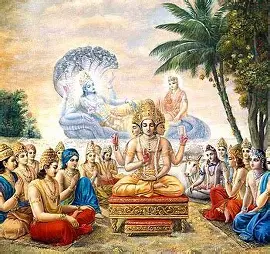
For perhaps the greatest tribute we can offer our teachers is not simply our appreciation, but the way we choose to live the teachings they have entrusted to us.
Hari Om Tat Sat