Understanding the Wounds of Maternal Attachment and the Journey Towards Healing
In Mother Hunger: How Adult Daughters Can Understand and Heal from Lost Nurturance, Protection, and Guidance, therapist Kelly McDaniel explores a deeply personal yet often overlooked dimension of women's emotional lives: the lasting impact of unmet maternal needs. Her work offers a compassionate framework for understanding how the absence of nurturing, protection, and guidance during childhood can influence a woman's identity, emotional regulation, relationships, and sense of self well into adulthood. 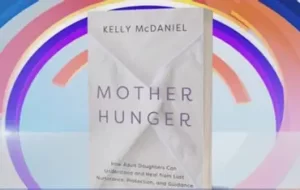
Mother hunger is not simply about having a difficult relationship with one's mother. It describes a deeper longing for the safety, connection, and affirmation that a child needs to develop a secure relationship with herself and the world. These needs may remain unmet even when a mother is physically present, particularly when she is emotionally unavailable, inconsistent, overwhelmed, or unable to provide adequate protection.
Understanding this experience through attachment theory, complex trauma, and trauma-informed psychotherapy helps illuminate why some relational wounds persist long after childhood has ended.
Attachment, Development, and the Mother–Daughter Relationship
Attachment theory, developed by John Bowlby and expanded through Mary Ainsworth's research, demonstrates the importance of early caregiving relationships in shaping our expectations of connection. Through repeated interactions with caregivers, children develop internal working models of themselves and others: whether they are worthy of love, whether others can be trusted, and whether closeness is safe.
When caregiving is sufficiently consistent and responsive, children have greater opportunities to develop secure attachment. When care is neglectful, frightening, unpredictable, or emotionally unavailable, attachment may develop along insecure patterns.
These experiences can influence how adult women navigate intimacy, friendships, conflict, and emotional vulnerability. Some may become excessively accommodating, fearing rejection if they express their needs. Others may withdraw from closeness, relying on independence to protect themselves from disappointment. Some experience a painful oscillation between longing for connection and fearing it.
The mother–daughter relationship can be particularly significant because maternal care often shapes a daughter's early understanding of femininity, embodiment, self-worth, and what it means to give and receive love. However, these influences are neither exclusive to mothers nor inevitable. Other caregivers and later relationships can provide important corrective experiences.
Mother Hunger and Complex Trauma
 McDaniel's framework becomes especially meaningful when considered alongside complex trauma. Unlike a single traumatic event, developmental and relational trauma may emerge through repeated experiences of emotional neglect, instability, humiliation, abandonment, or exposure to frightening caregiving environments.
When a child depends on the same person for both safety and emotional survival, she may face an impossible dilemma: seeking comfort from the very relationship that causes distress.
The nervous system can adapt to this contradiction through hypervigilance, emotional suppression, people-pleasing, dissociation, or difficulty recognising personal boundaries. These responses are not character flaws. They may represent strategies that once helped the child maintain connection or minimise danger.
In adulthood, these adaptations can become costly. A woman may find herself drawn towards emotionally unavailable partners, confusing anxiety with attraction or sacrifice with love. She may struggle to trust kindness, tolerate uncertainty, or believe that her needs deserve consideration.
The body can also carry the consequences of prolonged stress. Trauma may be associated with sleep difficulties, heightened physiological arousal, chronic tension, and other health concerns. Such symptoms are multifactorial, however, and should not automatically be attributed to maternal relationships or trauma alone.
Understanding these patterns requires compassion rather than blame. The purpose is not to diagnose mothers or reduce complex family histories to a single explanation, but to recognise how early relationships can shape later experiences.
Third-Degree Mother Hunger: When the Caregiver Is Also a Source of Fear
McDaniel describes the most severe form of maternal deprivation as Third-degree Mother Hunger, characterised by the absence of nurturance, protection, and guidance, particularly when the primary caregiver is also a source of fear or harm. She connects this experience with disorganised attachment, in which a child may simultaneously seek closeness and experience the attachment relationship as threatening.
For these children, there may be no reliable relational refuge. Their developing sense of safety, identity, and emotional regulation is shaped by contradictory experiences. In adulthood, this can contribute to difficulties trusting others, regulating intense emotions, maintaining boundaries, and feeling secure in intimate relationships.
Third-degree Mother Hunger is McDaniel's clinical framework, not a formal psychiatric diagnosis. Disorganised attachment and complex trauma are related but distinct concepts, and individual experiences require careful assessment rather than assumptions based on a label.
Intergenerational Trauma: The Wounds We Inherit
An essential dimension of this discussion is the transmission of relational patterns across generations. A mother who struggles to provide emotional availability or protection may herself have experienced neglect, violence, abandonment, or unresolved trauma. Without adequate support, these experiences can influence how she understands intimacy, responds to distress, and cares for her children.
In this way, maternal pain may travel through generations—not as an inevitable inheritance, but through learned behaviours, family relationships, chronic stress, and social circumstances. Research also investigates possible biological and epigenetic pathways, although the precise mechanisms and their implications in humans remain complex.
A trauma-informed perspective invites us to hold compassion for both mother and daughter without minimising harm. Understanding a mother's history does not invalidate her daughter's experience; equally, acknowledging the daughter's pain does not require condemning the mother.
Healing Through Attachment, Trauma Therapy, and Psychosynthesis
From a trauma-informed therapeutic perspective, healing begins by recognising that the strategies developed in childhood may once have been necessary for survival but no longer serve the adult self. Treatment may involve establishing safety, developing emotional regulation, processing grief, and gradually experiencing relationships in which boundaries and vulnerability are respected.
Psychosynthesis offers a complementary perspective by exploring the different parts of the self that emerge in response to experience. A protective, independent part may resist intimacy, while a younger, vulnerable part continues to long for reassurance. Another part may seek approval by becoming indispensable to others.
Rather than rejecting these aspects of ourselves, psychosynthesis encourages awareness, compassion, and a greater capacity to choose how we respond. The aim is not to erase the past, but to become less governed by it.
Ultimately, Mother Hunger invites us to recognise an often invisible wound and to understand the longing beneath patterns of shame, anxiety, and relational difficulty. Healing may involve grieving what was missing, learning to meet our needs differently, and developing relationships that offer greater safety and reciprocity.
The past cannot be rewritten, but its influence can change. Through therapeutic support, self-awareness, and corrective relational experiences, women can begin to build a more secure relationship with themselves and others.
Perhaps one of the most meaningful possibilities is that when we begin to understand and heal our own attachment wounds, we also create opportunities to interrupt patterns that might otherwise continue into future generations. We can honour the women who came before us without having to repeat their suffering—and learn that love need not be earned through sacrifice, fear, or self-abandonment.
The journey towards healing begins when we can finally name what was missing, acknowledge what it cost us, and recognise that we are still worthy of the nurturance, protection, and guidance we needed all along.
Further reading: Kelly McDaniel, Mother Hunger.
Hari Om Tat Sat